Common Trial Objections Cheat Sheet - With this cheat sheet, you can quickly object to an. Questions may be objectionable because they violate one of the “big four” evidentiary principles (relevance, authentication, hearsay, privilege) or. This section will be an example of how you can make your objection to the court. A ssuming facts not in evidence: This table sets out the most common objections, as well as exceptions to those objections. Contains as a predicate a statement. This section will better explain the purpose behind the objection. This checklist sets out the grounds and rationale for the most common objections, as well as responses and exceptions to those objections. What are the most common objections in court? What are the two ways a judge can rule on an objection?
This table sets out the most common objections, as well as exceptions to those objections. This section will be an example of how you can make your objection to the court. What are the most common objections in court? Contains as a predicate a statement. A ssuming facts not in evidence: This section will better explain the purpose behind the objection. What are the two ways a judge can rule on an objection? With this cheat sheet, you can quickly object to an. This checklist sets out the grounds and rationale for the most common objections, as well as responses and exceptions to those objections. Repeats the same question 7.

Objections Cheat Sheet PDF
This table sets out the most common objections, as well as exceptions to those objections. What are the most common objections in court? A ssuming facts not in evidence: This checklist sets out the grounds and rationale for the most common objections, as well as responses and exceptions to those objections. Questions may be objectionable because they violate one of.

Common Trial Objections Evidence (Law) Witness
Repeats the same question 7. This section will be an example of how you can make your objection to the court. What are the most common objections in court? This table sets out the most common objections, as well as exceptions to those objections. A ssuming facts not in evidence:

2013 Objections Trial Techniques Deposition (Law) Cross Examination
A ssuming facts not in evidence: What are the most common objections in court? With this cheat sheet, you can quickly object to an. This section will better explain the purpose behind the objection. Questions may be objectionable because they violate one of the “big four” evidentiary principles (relevance, authentication, hearsay, privilege) or.

Common Trial Objections Hearsay Witness
This section will better explain the purpose behind the objection. Questions may be objectionable because they violate one of the “big four” evidentiary principles (relevance, authentication, hearsay, privilege) or. This section will be an example of how you can make your objection to the court. Repeats the same question 7. Contains as a predicate a statement.
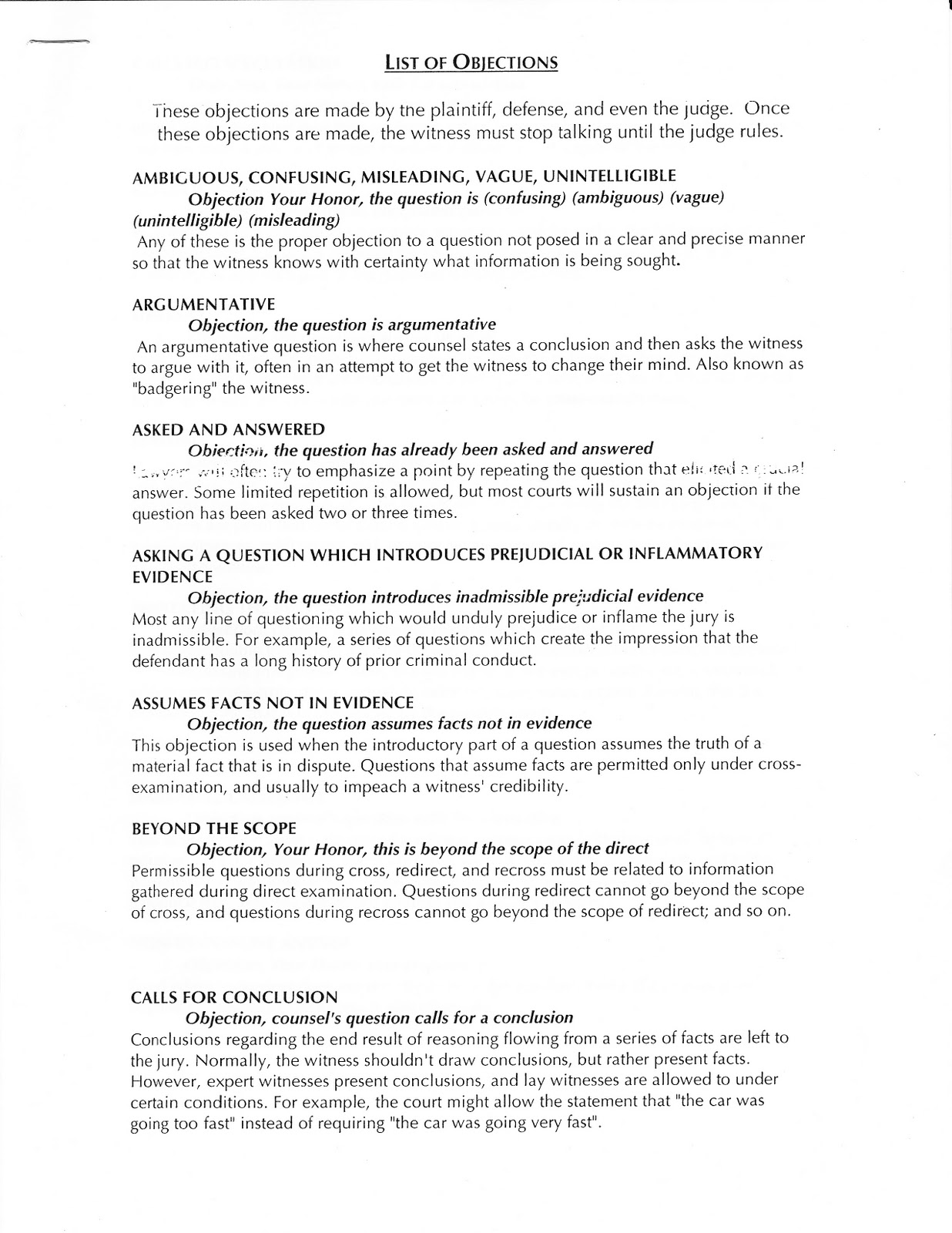
Common Objections In Court Cheat Sheet prntbl.concejomunicipaldechinu
This table sets out the most common objections, as well as exceptions to those objections. What are the two ways a judge can rule on an objection? What are the most common objections in court? Repeats the same question 7. Contains as a predicate a statement.

Court Objections Cheat Sheet Printable Templates Free
What are the most common objections in court? Questions may be objectionable because they violate one of the “big four” evidentiary principles (relevance, authentication, hearsay, privilege) or. Contains as a predicate a statement. This table sets out the most common objections, as well as exceptions to those objections. What are the two ways a judge can rule on an objection?

Objections Cheat Sheet A Comprehensive Guide to Common Objections and
Contains as a predicate a statement. This checklist sets out the grounds and rationale for the most common objections, as well as responses and exceptions to those objections. Repeats the same question 7. This section will better explain the purpose behind the objection. Questions may be objectionable because they violate one of the “big four” evidentiary principles (relevance, authentication, hearsay,.

A Comprehensive Guide to Common Objections, Privileges, Motions and
A ssuming facts not in evidence: With this cheat sheet, you can quickly object to an. Contains as a predicate a statement. Questions may be objectionable because they violate one of the “big four” evidentiary principles (relevance, authentication, hearsay, privilege) or. This section will better explain the purpose behind the objection.

a list of common objections to evidence
What are the two ways a judge can rule on an objection? This section will better explain the purpose behind the objection. Contains as a predicate a statement. Questions may be objectionable because they violate one of the “big four” evidentiary principles (relevance, authentication, hearsay, privilege) or. What are the most common objections in court?
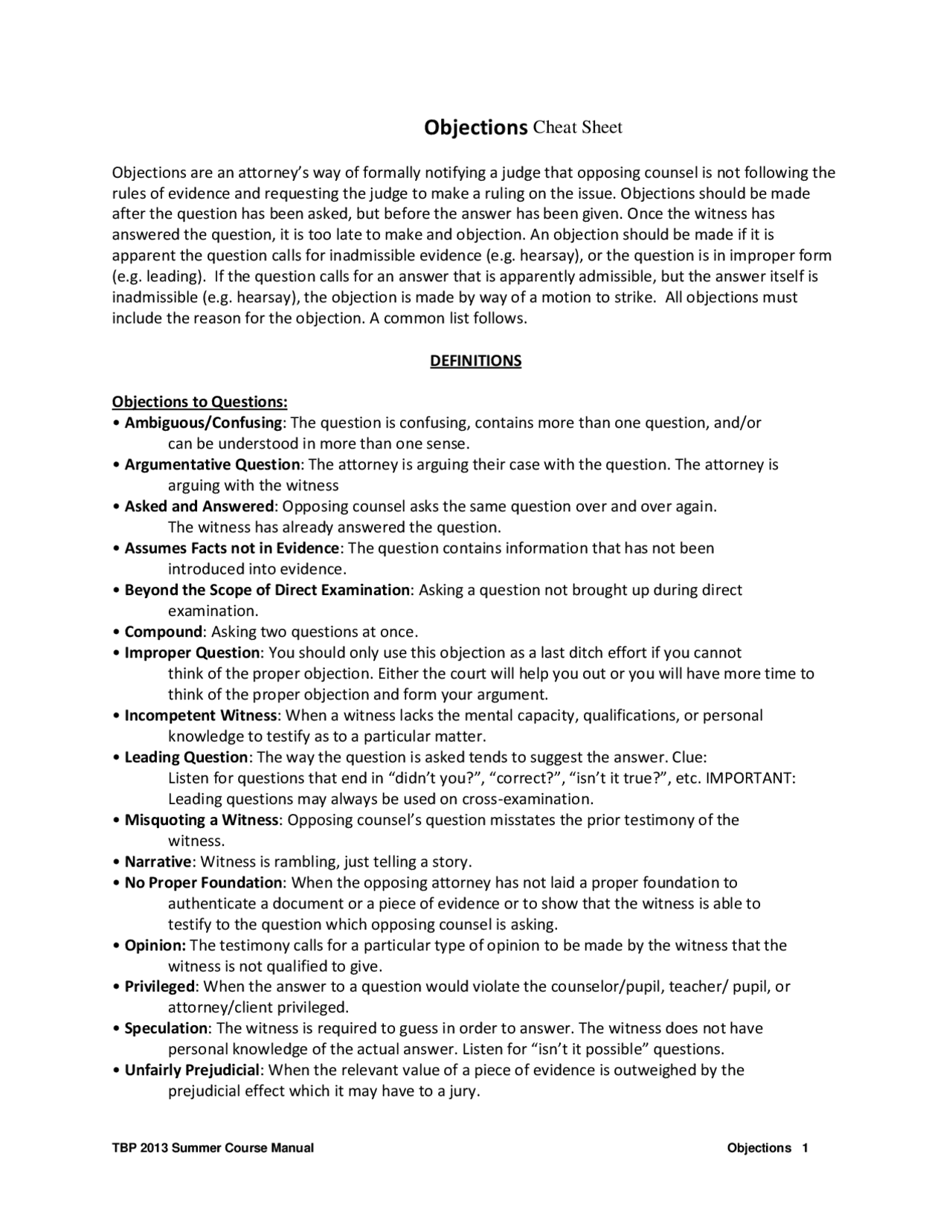
Common Objections In Court Cheat Sheet prntbl.concejomunicipaldechinu
This checklist sets out the grounds and rationale for the most common objections, as well as responses and exceptions to those objections. A ssuming facts not in evidence: Questions may be objectionable because they violate one of the “big four” evidentiary principles (relevance, authentication, hearsay, privilege) or. What are the most common objections in court? This section will better explain.
What Are The Two Ways A Judge Can Rule On An Objection?
This section will better explain the purpose behind the objection. This section will be an example of how you can make your objection to the court. This checklist sets out the grounds and rationale for the most common objections, as well as responses and exceptions to those objections. With this cheat sheet, you can quickly object to an.
What Are The Most Common Objections In Court?
Questions may be objectionable because they violate one of the “big four” evidentiary principles (relevance, authentication, hearsay, privilege) or. A ssuming facts not in evidence: Contains as a predicate a statement. This table sets out the most common objections, as well as exceptions to those objections.